This blog contains something related to Literature such as drama, novel, literary research, film
Tuesday, May 19, 2009
Robinson Crusoe (Dover Thrift Editions)
From School Library Journal
Grade 7 Up-Defoe's classic novel of shipwreck and survival, now nearly 300 years old, is abridged competently in this recording. The flavor of the 18th century language is retained, but the plot moves along at a pace more appealing to 21st century ears. The reader, Martin Shaw, has a pleasant voice, but unfortunately tends to trail off at the ends of sentences, losing whole words. As with all abridgements, large sections of the story and entire characters are omitted, but since most of the book tells of Crusoe's solitary sojourn on the island, this is not a major problem. This version is no substitute for the original, but it would be a supplemental purchase in libraries where abridgements are popular.
Sarah Flowers, Santa Clara County Library, Morgan Hill, CA
Copyright 2000 Reed Business Information, Inc. --This text refers to an out of print or unavailable edition of this title.
Review
(in full The Life and Strange Surprizing Adventures of Robinson Crusoe, of York, Mariner: Who Lived Eight and Twenty Years, All Alone in an Un-inhabited Island on the Coast of America, Near the Mouth of the Great River of Oroonoque; Having Been Cast on Shore by Shipwreck, Wherein All the Men Perished but Himself. With an Account how he was at last as Strangely Deliver'd by Pyrates. Written by Himself.) Novel by Daniel Defoe, published in 1719. The book is a unique fictional blending of the traditions of Puritan spiritual autobiography with an insistent scrutiny of the nature of men and women as social creatures, and it reveals an extraordinary ability to invent a sustaining modern myth. The title character leaves his comfortable middle-class home in England to go to sea. Surviving shipwreck, he lives on an island for 28 years, alone for most of the time until he saves the life of a savage, whom he names Friday. The two men eventually leave the island for England. Defoe probably based part of Crusoe's tale on the real-life experiences of Alexander Selkirk, a Scottish sailor who at his own request was put ashore on an uninhabited island in 1704 after a quarrel with his captain. He stayed there until 1709. The book was an immediate success in England and on the European continent, and Defoe wrote a sequel (The Farther Adventures of Robinson Crusoe) that was also published in 1719. Many stage and film adaptations have been made of Robinson Crusoe's life, and the book has spawned many imitations, including Johann Wyss's Swiss Family Robinson. -- The Merriam-Webster Encyclopedia of Literature --This text refers to an out of print or unavailable edition of this title.
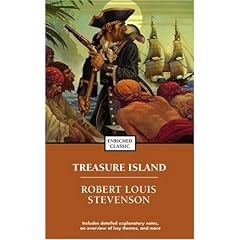
Treasure Island (Enriched Classics Series)
Product Description
The epic tale of a young man's quest to capture a hidden treasure on the open seas -- one of the best-loved adventure stories of all time.
EACH ENRICHED CLASSIC EDITION INCLUDES:
• A concise introduction that gives readers important background information
• A chronology of the author's life and work
• A timeline of significant events that provides the book's historical context
• An outline of key themes and plot points to help readers form their own interpretations
• Detailed explanatory notes
• Critical analysis, including contemporary and modern perspectives on the work
• Discussion questions to promote lively classroom and book group interaction
• A list of recommended related books and films to broaden the reader's experience
Enriched Classics offer readers affordable editions of great works of literature enhanced by helpful notes and insightful commentary. The scholarship provided in Enriched Classics enables readers to appreciate, understand, and enjoy the world's finest books to their full potential.
About the Author
Robert Louis Stevenson (1850-1894) was a novelist, poet, short-story writer, and essayist. In 1883, while bedridden with tuberculosis, he wrote what would become one of the best known and most beloved collections of children's poetry in the English language, A Child's Garden of Verses. Block City is taken from that collection. Stevenson is also the author of such classics as Treasure Island, Kidnapped, and The Strange Case of Dr. Jekyll and Mr. Hyde.
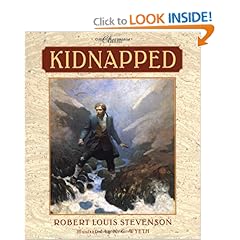
Kidnapped (Scribner Storybook Classics)
Grade 3-7 - The language in this adaptation is truer to the original, and thus, more sophisticated than that of Deborah Kestel's "Great Illustrated Classics" version (Playmore, 1992). After his father's death, David Balfour leaves his simple life in the Scottish Lowlands and sets out to find an uncle whom he has never met. Unaware of the bad blood between his father and uncle, he arrives at Ebeneezer's home, only to find that the cruel man has no intention of granting the lad his rightful inheritance. In fact, he has the boy kidnapped aboard a ship to be sold as a slave in North Carolina. David's tenacious spirit and his friendship with the rebellious Jacobite Alan Breck eventually bring him to safety. Told in 11 brief chapters, this abridgement introduces the basics of the story while maintaining a feel for the Scottish dialect. Some of the old-fashioned words and phrases may be a bit of a stretch for readers, but can be understood in context. Though obviously lacking in some of the details of the original, the narrative is easy to follow. Readers are able to gain insight into the hearts of David and Alan, although Ebeneezer and Captain Hoseason remain rather flat. Wyeth's oils (which appeared in the full-length version) add a sense of realism and capture interesting historical details. Meis's retelling retains the flavor of Stevenson's rollicking tale and might inspire readers to search out the full-length epic. - Nancy Menaldi-Scanlan, LaSalle Academy, Providence, RI
Copyright © Reed Business Information, a division of Reed Elsevier Inc. All rights reserved.
Product Description
David Balfour has never had an adventure. He has never spent a night camping in the Scottish Highlands. He has never sailed the high seas. He has never fought in a battle. In fact David Balfour has never even left home. All he knows is a quiet country life.
All this changes after the death of his parents. He suddenly learns that he, David Balfour, is a man of wealth and standing, and that he is not destined for a simple life after all. All he needs to do to assume this new station in life is to travel to the town of Cramond, Scotland, to collect his inheritance from his father's younger brother, an uncle he had not even known existed. But David soon discovers that this is not as simple as it sounds, as he struggles to survive and outwit his treacherous uncle in this classic adventure story.
Original oil paintings by N. C. Wyeth capture the vitality of Robert Louis Stevenson's timeless tale of fortune, camaraderie, betrayal, and independence.
Kidnapped (Scribner Storybook Classics)
Grade 3-7 - The language in this adaptation is truer to the original, and thus, more sophisticated than that of Deborah Kestel's "Great Illustrated Classics" version (Playmore, 1992). After his father's death, David Balfour leaves his simple life in the Scottish Lowlands and sets out to find an uncle whom he has never met. Unaware of the bad blood between his father and uncle, he arrives at Ebeneezer's home, only to find that the cruel man has no intention of granting the lad his rightful inheritance. In fact, he has the boy kidnapped aboard a ship to be sold as a slave in North Carolina. David's tenacious spirit and his friendship with the rebellious Jacobite Alan Breck eventually bring him to safety. Told in 11 brief chapters, this abridgement introduces the basics of the story while maintaining a feel for the Scottish dialect. Some of the old-fashioned words and phrases may be a bit of a stretch for readers, but can be understood in context. Though obviously lacking in some of the details of the original, the narrative is easy to follow. Readers are able to gain insight into the hearts of David and Alan, although Ebeneezer and Captain Hoseason remain rather flat. Wyeth's oils (which appeared in the full-length version) add a sense of realism and capture interesting historical details. Meis's retelling retains the flavor of Stevenson's rollicking tale and might inspire readers to search out the full-length epic. - Nancy Menaldi-Scanlan, LaSalle Academy, Providence, RI
Copyright © Reed Business Information, a division of Reed Elsevier Inc. All rights reserved.
Product Description
David Balfour has never had an adventure. He has never spent a night camping in the Scottish Highlands. He has never sailed the high seas. He has never fought in a battle. In fact David Balfour has never even left home. All he knows is a quiet country life.
All this changes after the death of his parents. He suddenly learns that he, David Balfour, is a man of wealth and standing, and that he is not destined for a simple life after all. All he needs to do to assume this new station in life is to travel to the town of Cramond, Scotland, to collect his inheritance from his father's younger brother, an uncle he had not even known existed. But David soon discovers that this is not as simple as it sounds, as he struggles to survive and outwit his treacherous uncle in this classic adventure story.
Original oil paintings by N. C. Wyeth capture the vitality of Robert Louis Stevenson's timeless tale of fortune, camaraderie, betrayal, and independence.
Treasure Island and Kidnapped (Cliffs Notes)
Product Description
These novels of pirates on the high seas and intrigue in the Scottish highlands were written on a challenge by Stevenson's teenage stepson to "write something really interesting." The results are these fast-moving and adventurous books, simple and entertaining.
From the Back Cover
Cliffs Test Preparation Guides help students prepare for and improve their performance on standardized tests ACT Preparation Guide CBEST Preparation Guide CLAST Preparation Guide ELM Review GMAT Preparation Guide GRE Preparation Guide LSAT Preparation Guide MAT Preparation Guide MATH Review for Standardized Tests MSAT Preparation Guide Memory Power for Exams Police Officer Examination Preparation Guide Police Sergeant Examination Preparation Guide Police Management Examinations Preparation Guide Postal Examinations Preparation Guide Praxis I: PPST Preparation Guide Praxis II: NTE Core Battery Preparation Guide SAT Preparation Guide SAT II Writing Preparation Guide TASP Preparation Guide TOEFL Preparation Guide with 2 cassettes Advanced Practice for the TOEFL with 2 cassettes Verbal Review for Standardized Tests Writing Proficiency Examinations You Can Pass the GED Cliffs Quick Reviews help students in introductory college courses or Advanced Placement classes Algebra I Algebra II Anatomy & Physiology Basic Math and Pre-Algebra Biology Calculus Chemistry Differential Equations Economics Geometry Linear Algebra Microbiology Physics Statistics Trigonometry Cliffs Advanced Placement Preparation Guides help high school students taking Advanced Placement courses to earn college credit AP Biology AP Calculus AB AP Chemistry AP English Language & Composition AP English Literature & Composition AP United States History Cliffs Complete Study Editions are comprehensive study guides with complete text, running commentary and glossary Chaucer's Prologue Chaucer's Wife of Bath Hamlet Julius Caesar King Henry IV, Part I King Lear Macbeth The Merchant of Venice Othello Romeo and Juliet The Tempest Twelfth Night See inside back cover for listing of Cliffs Notes titles Registered trademarks include: GRE, MSAT, the Praxis Series, and TOEFL (Educational Testing Service): AP, Advanced Placement Program, and SAT (College Entrance Examination Board); GMAT (Graduate Management Admission Council); and LSAT (Law School Admission Council.) Treasure Island & Kidnapped
Kidnapped (Tor Classics)
From School Library Journal
Grade 6 Up-Kidnapped by Robert Louis Stevenson remains one of the classic coming-of-age stories for children and young adults today. After the death of his father, David Balfour sets out to meet his uncle and claim his inheritance. This adventure takes him through the highlands of Scotland where he embarks upon a long journey back from treachery and deceit. The reading by David Rintoul, whose voice is easily recognizable from his roles in several PBS productions such as Pride and Prejudice, translates the written word into an auditory landscape of Scotland. He interprets each character using several voices. As the story progresses, listeners can hear David changing from an uncertain and hesitant youth, to the assured and forthright young man he becomes at the conclusion. Without any special effects, the fight among the crew of the Coventry in the RoundhouseAchairs pushed over, the sounds of the sea hitting against the great shipAbecomes easily visualized. the reader's skill setting the stage and showing the growth of the character is phenomenal. While this is an abridgement, the story flows easily and gives a full picture from beginning to end. This audiobook is a wonderful way to introduce this style of literature to young readers who may feel inhibited by reading the language of Stevenson. Whether read for enjoyment or to enrich the learning experience, this is a must for every serious library collection of the classics.
Tina Hudak, Takoma Park Maryland Library, MD
Copyright 2000 Reed Business Information, Inc. --This text refers to the Audio Cassette edition.
From Library Journal
Editor Menikoff insists that Stevenson's novel has been unfairly relegated to young adult fiction. To remedy that, he restored the text to its original form, reinstating deleted passages and Stevenson's original punctuation. The text is buttressed with 19th-century drawings from the book's serializations and an introduction that explains the book's nexus and puts it into its Scottish cultural context. (Classic Returns, LJ 5/15/99)
Copyright 2000 Reed Business Information, Inc. --This text refers to the Hardcover edition.
Classical and Medieval Literature Criticism
Here is the best classic literature that you must know. If you want to know the criticism of literature in Medieval era, which belongs to classic, you must read this book. Buy this book soon!
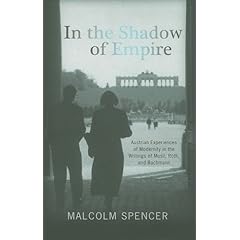
In the Shadow of Empire: Austrian Experiences of Modernity in the Writings of Musil, Roth, and Bachmann (Studies in German Literature Linguistics and
In the Shadow of Empire: Austrian Experiences of Modernity in the Writings of Musil, Roth, and Bachmann (Studies in German Literature Linguistics and Culture)
Product Description
Austria was not the only European country whose old order disintegrated in the early twentieth century, giving way to the crisis of modernity, nor the only country whose literature bears the marks of this crisis. But modernity's onset was experienced
differently in Austria: in the words of Karl Kraus, it served as "laboratory for the fall of world civilization." This book examines the crisis as reflected in fiction written by Robert Musil, Joseph Roth, and Ingeborg Bachmann between 1920 and 1970. After examining the elusive concept of modernity, Malcolm Spencer looks at the responses of the three authors to the central themes of modernity: fragmentation, nationalism, the end of empire, and ambivalence. Chapters on Musil examine his understanding of the ancien régime in Austria and his analysis of the ideological stage of modernity. Spencer then considers Roth's more negative reaction, showing the post-imperial novel Radetzkymarsch to be a nostalgic response to the collapse of Habsburg Austria and the rise of fascism. The final chapter looks again at the end of empire, not in the work of writers who lived through it, but through that of one who experienced it as a historical and cultural legacy: Ingeborg Bachmann.
About the Author
Malcolm Spencer is an Honorary Research Fellow at the University of Birmingham. He teaches German and French at Walton High School, Stafford, UK
Product Description
Austria was not the only European country whose old order disintegrated in the early twentieth century, giving way to the crisis of modernity, nor the only country whose literature bears the marks of this crisis. But modernity's onset was experienced
differently in Austria: in the words of Karl Kraus, it served as "laboratory for the fall of world civilization." This book examines the crisis as reflected in fiction written by Robert Musil, Joseph Roth, and Ingeborg Bachmann between 1920 and 1970. After examining the elusive concept of modernity, Malcolm Spencer looks at the responses of the three authors to the central themes of modernity: fragmentation, nationalism, the end of empire, and ambivalence. Chapters on Musil examine his understanding of the ancien régime in Austria and his analysis of the ideological stage of modernity. Spencer then considers Roth's more negative reaction, showing the post-imperial novel Radetzkymarsch to be a nostalgic response to the collapse of Habsburg Austria and the rise of fascism. The final chapter looks again at the end of empire, not in the work of writers who lived through it, but through that of one who experienced it as a historical and cultural legacy: Ingeborg Bachmann.
About the Author
Malcolm Spencer is an Honorary Research Fellow at the University of Birmingham. He teaches German and French at Walton High School, Stafford, UK
Science Fiction for Young Readers: (Contributions to the Study of Science Fiction and Fantasy)
Description
In this collection of essays, authorities on a wide range of topics related to science fiction discuss themes and works of special interest to young readers. The first section includes chapters on the origins of science fiction as a genre for young people, and containes essays on Victor Appleton's "Tom Swift" series and the contributions of Isaac Asimov, Robert A. Heinlein, and Madeleine L'Engle. The second section looks beyond the origins of science fiction to particular works and authors. The chapters in this section approach authors and their works from particular thematic perspectives and thus show how particular themes bind together and define the body of an author's writings. The third section, on science fiction as a vehicle for ideas, looks beyond the literary features of the genre. Chapters in this section discuss science fiction as a means for conveying religious, philosophical, and social messages.
About the Author
C. W. SULLIVAN III is Professor of English and Director of Graduate Studies in English at East Carolina University.
Saturday, May 9, 2009
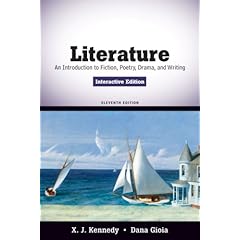
Literature: An Introduction to Fiction, Poetry, Drama, and Writing, Interactive Edition (11th Edition)
The most popular introductory anthology of its kind, Kennedy/Gioia’s Literature continues to inspire people with engaging insights on reading and writing about stories, poems, and plays. Literature, Interactive Edition, 11/e comes automatically with a specialized version of MyLiteratureLab, Longman's multimedia website designed specifically for Kennedy/Gioia users. MyLiteratureLab icons are found in the margins of the text along with a list of media assets at the front of the anthology.
Poets in their own right, editors X. J. Kennedy and Dana Gioia bring personal warmth and a human perspective to this comprehensive anthology. Literature, Interactive Edition, 11/e, presents readable discussions of the literary devices, illustrated by engaging works, supported by useful writing tips, and followed by seven chapters devoted to writing that have been thoroughly updated to reflect MLA’s latest guidelines. Conversations with Amy Tan, Kay Ryan (the 2008 poet laureate), and David Ives, conducted by Dana Gioia, offer readers an insider’s look into the importance of reading to three contemporary writers. A Latin American Writers casebook is new to Fiction and collects some of the finest authors from the region including Octavia Paz, Gabriel Garcia Marquez, and Ines Arendondo. A casebook on Nathaniel Hawthorne’s “Young Goodman Brown” is now featured as part of the Three Stories In-depth chapter. Many new writers have been added including Naguib Mahfouz, Virginia Woolf, Sherman Alexie, Mary Oliver, Bettie Sellers, and Anne Deavere Smith
For anyone who enjoys literature presented with personal warmth and a human perspective.
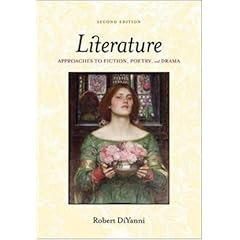
Literature: Approaches with ARIEL (Book + CD-ROM)
Product Description
Like its larger counterpart, the compact Literature: Approaches to Fiction, Poetry, and Drama by Robert DiYanni features student-centered approaches to literature--from experience to interpretation to evaluation--and an emphasis on making connections between texts and thinking critically about literature. .
. Known for its clear presentation of the formal elements of literature and literary analysis, this compact anthology effectively balances classic, modern, and contemporary works across the three major genres, blending well-known writers with a diverse gathering of newer, international figures. This literary breadth is supplemented by extensive coverage of writing about literature, making this book an excellent text for introduction to literature courses as well as literature-based composition courses..
About the Author
Robert DiYanni is Professor of English at Pace University, Pleasantville, New York, where he teaches courses in literature, writing, and humanities. He has also taught at Queens College of the City University of New York, at New York University in the Graduate Rhetoric Program, and most recently in the Expository Writing Program at Harvard University. He received his B.A. from Rutgers University (1968) and his Ph.D. from the City University of New York (1976).. . Robert DiYanni has written articles and reviews on various aspects of literature, composition, and pedagogy. His books include Literature: Reading, Fiction, Poetry, Drama and the Essay; The McGraw-Hill Book of Poetry; Women�s Voices; Like Season�d Timber: New Essays on George Herbert; and Modern American Poets: Their Voices and Visions (a text to accompany the Annenberg-funded telecourse, Voices and Visions). With Kraft Rompf, he edited The McGraw-Hill Book of Poetry, (1993) and The McGraw-Hill Book of Fiction (1995). With Pat Hoy, he edited Encounters: Readings for Inquiry and Argument (1997).. . .
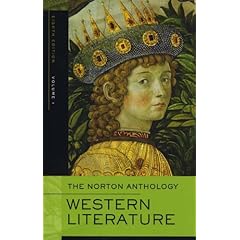
The Norton Anthology of Western Literature, Volume 1
Product Description
A library of Western literature in two volumes, this new edition offers more than 40 works in their entirety—from Homer's Odyssey to Chinua Achebe's Things Fall Apart—as well as dozens of excerpted works and over 200 lyric poems.
About the Author
Heather James, Ph.D. Berkeley, is Associate Professor of English at the University of Southern California. She is the author of Shakespeare’s Troy: Drama, Politics, and the Translation of Empire.
Sarah Lawall, Ph.D. Yale, is Professor of Comparative Literature at the University of Massachusetts, Amherst. Her publications include Critics of Consciousness: The Existential Structures of Literature and Reading World Literature: Theory, History, Practice.
Lee Patterson, Ph.D. Yale, is F. W. Hilles Professor of English at Yale University. He is the author of Chaucer and the Subject of History; Literary Practice and Social Change in Britain, 1380–1530; and Negotiating the Past: The Historical Understanding of Medieval Literature.
Patricia Meyer Spacks, Ph.D. Berkeley, is Edgar F. Shannon Professor of English at the University of Virginia. Her publications include An Argument of Images: The Poetry of Alexander Pope; The Female Imagination; The Adolescent Idea: Myths of Youth and the Adult Imagination; Desire and Truth: Functions of Plot in Eighteenth-Century English Novels; and Boredom: The Literary History of a State of Mind.
William G. Thalmann, Ph.D. Yale, is Professor of Classics at the University of Southern California. His publications include The Swineherd and the Bow: Representations of Class in the Odyssey.
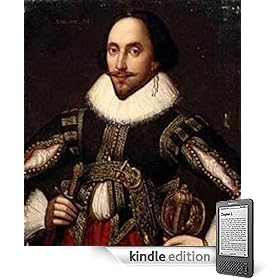
The Complete Works of William Shakespeare (43 Works & 154 Sonnets) With Active Table of Contents ATOC
This is The Complete Works of William Shakespeare All 43 Works & 154 Sonnets.
This eBook has an Active Table of Contents & is easily Searchable.
All's Well That Ends Well
Antony and Cleopatra
As You Like It
The Comedy of Errors
The Tragedy of Coriolanus
Cymbeline
The Tragedy of Hamlet, Prince of Denmark
The First part of King Henry the Fourth
The Second part of King Henry the Fourth
The Life of King Henry the Fifth
The First part of King Henry the Sixth
The Second part of King Henry the Sixth
The Third part of King Henry the Sixth
The Life of King Henry the Eighth
The Life and Death of Julies Caesar
The Life and Death of King John
King Lear
Loves Labours Lost
The Tragedy of Macbeth
Measure for Measure
The Merry Wives of Windsor
The Merchant of Venice
A Midsummer Night's Dream
Much Ado About Nothing
Othello, the Moore of Venice
Pericles, Prince of Tyre
The Life and Death of Richard the Second
The Life and Death of Richard the Third
Romeo and Juliet
The Taming of the Shrew
The Tempest
Timon of Athens
Titus Andronicus
Troilus and Cressida
Twelfth Night
Two Gentlemen of Verona
Winter's Tale
A Lover's Complaint
The Passionate Pilgrim
The Phoenix & The Turtle
The Rape of Lucrece
The Argument
The Sonnets (154)
Venus & Adonis
Please, Enjoy.
Subscribe to:
Posts (Atom)